The Ultimate 2026 Importer’s Guide to Sustainable Transport China Export
As Chief Export Consultant at Electric Auto China, headquartered in Shanghai, I have witnessed firsthand the seismic transformation of China’s automotive sector. The year 2026 marks a pivotal inflection point: China has decisively shifted from being the “world’s factory” for combustion engines to becoming the dominant command center for sustainable transport ecosystems. With total logistics value exceeding 350 trillion yuan and electric vehicles now constituting over 35% of urban delivery fleets, the infrastructure supporting China’s export engine has evolved into a sophisticated, compliance-heavy, and sustainability-driven network.
This masterclass guide is engineered specifically for European and global B2B buyers, fleet operators, and automotive distributors navigating the complexities of China’s 2026 EV export framework. We will dissect the regulatory labyrinth of export licenses, calculate precise landed costs for multi-modal shipping, analyze the shift toward multi-regional production networks, and provide actionable frameworks for supplier verification. Whether you are importing battery electric vehicles (BEVs), plug-in hybrids (PHEVs), or commercial electric vans, this guide ensures your sourcing strategy aligns with both China’s dual carbon goals and the European Union’s stringent supply chain due diligence requirements.
1. The Macro-Economics of Sustainable Transport China Export in 2026
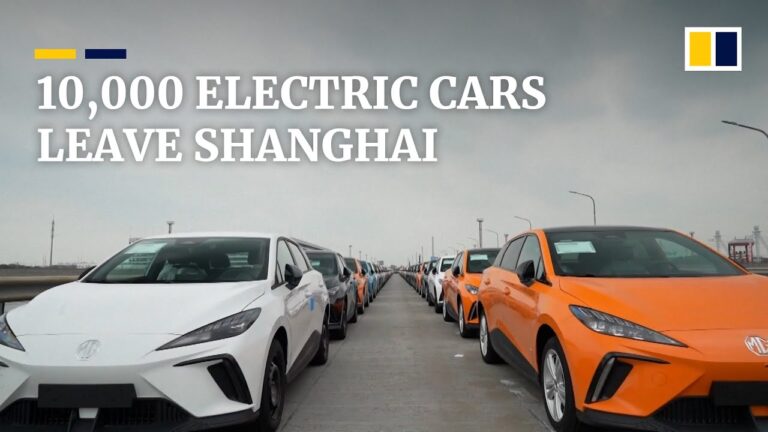
China’s automotive market has fundamentally reset its operating baseline. In 2025, the industry closed with approximately 34.4 million units sold domestically—a 9.4% year-over-year increase that decisively surpassed the previous 2017 peak. However, the most significant structural shift lies in the export engine: 7.1 million vehicles shipped internationally, with New Energy Vehicles (NEVs) accounting for more than one-third of outbound volume.
The Electrification Export Pivot
The marginal growth engine has irreversibly shifted to electrification. NEV shipments surged by 3.6 million units in 2025 (+28.2% YoY), while internal combustion engine (ICE) volumes contracted by 700,000 units (-3.6% YoY). This divergence signals a permanent structural change: China’s export growth is no longer opportunistic or geographically concentrated but geographically diversified and policy-aware, embedding exports as a durable second growth pillar alongside domestic consumption.
Key Market Dynamics:
– Product Value Upgrading: Chinese exports have transitioned from low-margin components to high-value integrated systems—complete EVs, renewable energy equipment, and advanced battery packs. The average export value per vehicle has increased significantly as manufacturers prioritize intelligent connected vehicles (ICVs) over basic transportation.
– Supply Chain Regionalization: The “China Plus One” strategy has evolved into blended supply models. Chinese inputs now flow to Southeast Asian assembly hubs for final customization, reducing geopolitical concentration risk while maintaining China as the central innovation node.
– Sustainability as Competitive Differentiator: Green logistics has transitioned from concept to mandate. Solar-powered warehouses, carbon-neutral shipping options, and battery recycling certifications are no longer value-adds but baseline requirements for accessing premium European markets.
Strategic Implications for Importers
The macro-economic reality is clear: China is not merely exporting vehicles; it is exporting complete sustainable transport ecosystems. European buyers must recognize that importing a Chinese EV in 2026 means engaging with a supply chain that includes carbon disclosure requirements, blockchain-tracked battery provenance, and compliance with the EU’s Corporate Sustainability Due Diligence Directive (CSDDD).
2. Understanding China’s Strict EV Export Regulations
January 1, 2026, marked the implementation of the most significant regulatory overhaul in China’s automotive export history. The Ministry of Commerce (MOFCOM) now mandates that all manufacturers and exporters of electric vehicles obtain official export licenses before shipping vehicles abroad. This framework fundamentally alters how B2B buyers must approach supplier verification.
The Export License Framework
Under the 2026 regulations, only accredited manufacturers and authorized dealers may apply for export licenses. This policy targets the systemic issue of irregular exports—specifically, new vehicles being misclassified as “used” through unauthorized channels to circumvent tariffs and regulations. These practices had undermined market integrity, leaving international buyers with outdated software, limited after-sales support, and vehicles lacking proper homologation documentation.
Regulatory Requirements:
– Manufacturer Accreditation: EV producers must demonstrate compliance with GB standards (Chinese national standards), ISO 9001 quality management, and specific NEV production qualifications.
– Export Authorization: Exporters must prove established after-sales service networks in destination countries or partnerships with certified local service providers.
– Documentation Integrity: Each vehicle requires a unique export certificate verifying software version, battery health status, and compliance with destination market regulations.
Impact on Foreign Manufacturers
The regulations extend beyond domestic Chinese brands to encompass foreign giants manufacturing in China, including Tesla, Volkswagen, and BMW. These companies must now navigate the same licensing framework when exporting from their Chinese plants to global markets. This creates a level playing field but adds bureaucratic layers that require sophisticated regulatory navigation.
Compliance Checklist for Buyers:
1. Verify the supplier’s Export License number with MOFCOM’s public registry
2. Confirm the vehicle’s software version matches destination market requirements
3. Ensure battery certification (UN 38.3) is current and traceable
4. Validate that the exporter maintains liability insurance for international markets
3. Sourcing Strategy: Direct Factory vs. Authorized Export Agents
The 2026 regulatory environment has bifurcated sourcing channels into two distinct pathways, each with specific risk profiles and cost structures. Understanding these distinctions is critical for securing sustainable transport assets without regulatory exposure.
Direct Factory Partnerships
Engaging directly with Tier-1 manufacturers (BYD, NIO, XPeng, Geely, SAIC) offers maximum price transparency and customization potential. However, direct relationships require substantial minimum order quantities (MOQs), typically 100+ units for established brands, and demand sophisticated regulatory handling capabilities on the buyer’s side.
Advantages:
– Factory-direct pricing (5-8% cost reduction)
– Custom specification options (battery size, interior trim, software localization)
– Direct warranty relationships
– Priority allocation during supply constraints
Challenges:
– High MOQs and letter-of-credit payment requirements
– Complex documentation responsibilities fall on the buyer
– Longer lead times for custom configurations (90-120 days)
Authorized Export Agents
Licensed export agents—such as Electric Auto China—serve as regulatory intermediaries, aggregating demand from multiple buyers to meet factory MOQs while handling compliance documentation. This model suits mid-size importers (10-50 unit orders) and those new to the Chinese market.
Comparative Analysis:
| Criteria | Direct Factory | Authorized Export Agent |
|---|---|---|
| Minimum Order | 100-500 units | 1-50 units |
| Unit Cost | Base factory price | +3-5% commission |
| Regulatory Handling | Buyer responsible | Full-service included |
| Homologation Support | Limited/basic | Comprehensive |
| Payment Terms | 100% LC or TT in advance | Flexible (30/70 splits) |
| After-Sales Liability | Factory direct | Agent-mediated |
| Lead Time | 90-120 days | 30-60 days (stock models) |
Strategic Recommendation
For European B2B buyers entering the market in 2026, we recommend a hybrid approach: initiate relationships through authorized agents to navigate regulatory complexity, then transition to direct factory contracts once annual volumes exceed 200 units. This mitigates initial compliance risks while building the operational experience necessary for direct procurement.
4. Financial Mechanics: Pricing and Landed Costs
Understanding the true cost of importing sustainable transport from China requires moving beyond FOB (Free On Board) pricing to calculate comprehensive landed costs. The 2026 market features volatile battery material costs, fluctuating ocean freight rates, and evolving tariff structures—particularly the EU’s adjusted duties on Chinese BEVs.
Cost Structure Breakdown
The following table illustrates a landed cost calculation for a mid-size Chinese EV (e.g., BYD Seal or comparable) imported to Rotterdam, Netherlands, under 2026 market conditions:
| Cost Component | Amount (USD) | Notes |
|---|---|---|
| EXW Factory Price | $28,000 | Base vehicle, standard trim |
| Export License Processing | $150 | Mandatory 2026 documentation |
| Domestic Transport (Factory to Port) | $400 | Rail/truck to Shanghai/Tianjin |
| Port Handling & Documentation | $600 | Customs clearance, inspection |
| Ocean Freight (RORO) | $1,800 | Shanghai to Rotterdam, 40ft equivalent |
| Marine Insurance (110% CIF) | $330 | All-risks coverage |
| CIF Value | $31,280 | Cost + Insurance + Freight |
| EU Import Duty (10%) | $3,128 | Standard automotive tariff |
| EU Countervailing Duty | $2,800 | Adjusted 2026 rate for Chinese BEVs |
| VAT (21% Netherlands) | $7,772 | Calculated on CIF + Duties |
| Homologation & Type Approval | $2,500 | eCall, software compliance, testing |
| Local Transport & Dealer Prep | $500 | Port to dealership/facility |
| TOTAL LANDED COST | $47,980 | Ready for sale/registration |
Note: Countervailing duties vary by manufacturer and ongoing trade negotiations. PHEVs currently face lower regulatory scrutiny than pure BEVs.
Financial Risk Management
Currency Exposure: The Yuan (CNY) has shown increased volatility against the Euro amid monetary policy divergence. We recommend hedging 50-70% of contract values through forward exchange agreements, particularly for orders exceeding $500,000.
Payment Structures: The 2026 regulatory environment favors irrevocable Letters of Credit (LCs) for factory-direct purchases, while authorized agents may accept 30% deposit/70% against bill of lading terms. Avoid 100% advance payment unless dealing with established relationships exceeding three years.
Battery Cost Volatility: Lithium carbonate prices have stabilized but remain sensitive to supply disruptions. Negotiate price adjustment clauses for orders with delivery windows exceeding six months, capping fluctuations at ±5%.
5. Global Logistics: Ocean Freight & Battery Transport Compliance
The logistics of transporting lithium-ion batteries and electric vehicles require adherence to stringent international dangerous goods regulations. China’s green logistics evolution—featuring electric port vehicles and solar-powered warehousing—has improved origin-side sustainability, but ocean freight remains the critical compliance chokepoint.
Shipping Modalities: RORO vs. Container
Roll-On/Roll-Off (RORO): The preferred method for finished vehicles, RORO vessels allow cars to be driven directly aboard and secured on vehicle decks. Advantages include reduced handling damage risk and lower per-unit costs for volumes exceeding 10 units. Major operators (Wallenius Wilhelmsen, Eukor) now offer carbon-neutral shipping options using biofuel blends.
Containerized Shipping: Suitable for disassembled vehicles or when RORO capacity is constrained (common during Q4 peak seasons). Vehicles require blocking, bracing, and battery disconnection protocols. Higher damage risk but greater schedule flexibility.
Logistics Comparison:
| Method | Cost per Unit | Transit Time | Battery Compliance | Best For |
|---|---|---|---|---|
| RORO | $1,500-$2,200 | 28-35 days | UN 38.3 summary required | Finished vehicles, volume imports |
| Flat Rack | $2,800-$3,500 | 25-30 days | Full dangerous goods declaration | Oversized commercial vehicles |
| Container (4-6 units) | $2,000-$2,600 | 30-40 days | Individual battery disconnect certs | Mixed SKU shipments |
Battery Transport Compliance (UN 38.3)
All lithium-ion batteries must comply with UN 38.3 testing requirements (UN Manual of Tests and Criteria). Critical 2026 updates include:
– State of Charge (SoC): Batteries must ship at maximum 30% charge for ocean freight
– Temperature Monitoring: Mandatory data loggers for voyages exceeding 14 days
– Dangerous Goods Documentation: Shipper’s Declaration for Dangerous Goods (DGD) must specify battery chemistry (NCM vs. LFP) and watt-hour ratings
Green Logistics Integration: Leading Chinese logistics providers now offer carbon footprint tracking from factory gate to destination port, generating documentation compliant with EU Corporate Sustainability Reporting Directive (CSRD) requirements. This traceability commands a 2-3% premium but is essential for European corporate fleet buyers.
6. Localization & Homologation: Preparing Cars for Local Markets
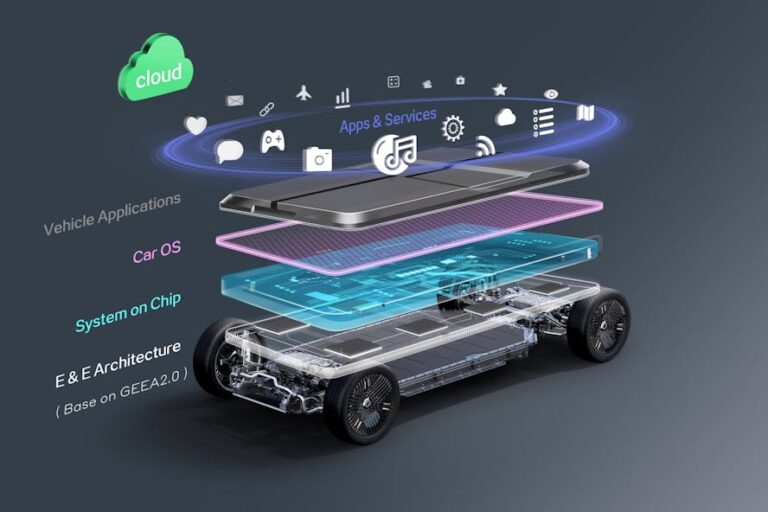
Importing a Chinese EV is not merely a logistics exercise—it requires comprehensive technical adaptation to meet local regulatory standards. The 2026 generation of Chinese vehicles features increasingly sophisticated software and connectivity systems that require careful localization.
European Homologation Requirements
Type Approval (Whole Vehicle): Vehicles must obtain EU Whole Vehicle Type Approval (WVTA) under Regulation (EU) 2018/858. This includes:
– eCall Compliance: Automatic emergency call systems must interface with European 112 networks
– EMC Testing: Electromagnetic compatibility for high-voltage systems
– Cybersecurity: UN R155 and R156 compliance for software updates and security management
– GDPR Compliance: Data handling protocols for telematics and connected services
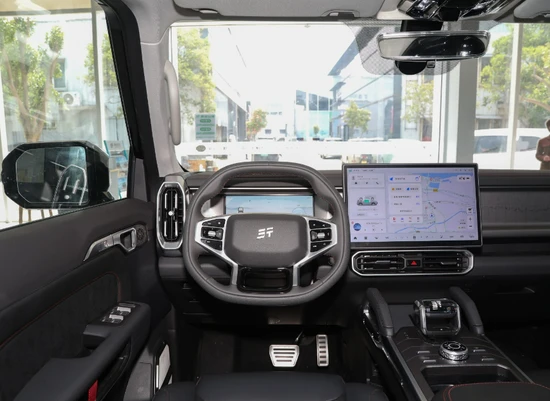
Software Localization: Many Chinese EVs ship with Mandarin-language head units and apps restricted to Chinese App Stores. Budget $800-$1,500 per vehicle for software flashing, language pack installation, and app ecosystem substitution (e.g., replacing Baidu Maps with European navigation solutions).
Market-Specific Adaptations
Right-Hand Drive (RHD): For UK, Australian, or Japanese markets, confirm factory RHD availability. Post-manufacture conversion is economically unviable ($8,000+ per unit).
Charging Standards: While CCS2 is standard for Europe, verify that imported vehicles support local charging protocols without adapter requirements. Some Chinese models require hardware modifications for 800V fast-charging compatibility with European networks.
Case Study: Nordic Market Entry
A Danish fleet operator imported 50 units of a popular Chinese electric sedan in Q4 2025. Despite possessing EU type approval, the vehicles required:
– Winter tire specification upgrades (mandatory in Scandinavia)
– Heated steering wheel activation (software-locked in export models)
– Local SIM card integration for connected services
Total localization cost: €1,200 per unit, adding 4 weeks to delivery timeline.
7. After-Sales Ecosystem: Securing Parts and Service Abroad
The sustainability of your import business depends not on the first sale, but on the lifetime serviceability of the vehicles. The 2026 regulatory framework explicitly requires exporters to demonstrate viable after-sales networks, but implementation quality varies significantly.
Parts Supply Chain Architecture
Critical Spare Parts Inventory: Establish a local bonded warehouse holding high-turnover components:
– Battery management system (BMS) controllers
– Headlight/taillight assemblies (LED matrix units)
– Infotainment screens and control modules
– HVAC components (heat pumps in EVs have high failure rates)
Lead Time Reality: OEM parts from China typically require 45-60 days for air freight delivery. For European importers, we recommend maintaining a $50,000-$75,000 critical parts inventory for every 200 vehicles in operation.
Technical Support Framework
Diagnostic Equipment: Chinese EVs require proprietary diagnostic tools (often Android-based tablets with manufacturer-specific software). Ensure your technical team receives training on these systems, which differ significantly from European OBD-II standards.
Over-the-Air (OTA) Updates: Verify that vehicles support international SIM cards or Wi-Fi-based updates. Some early export models contain region-locked software that cannot be updated outside mainland China—a critical issue for battery management optimization.
Warranty Structures: Chinese manufacturers typically offer 5-year/100,000km vehicle warranties and 8-year/150,000km battery warranties. However, warranty claim processing requires documentation through authorized channels—another reason to verify your supplier’s export license status.
8. Avoiding Scams: How to Audit a Chinese EV Supplier
The 2026 export license requirement was designed specifically to eliminate the “gray market” of unauthorized exporters selling new vehicles as used, misrepresenting battery health, or disappearing after receiving deposits. As a B2B buyer, rigorous due diligence is non-negotiable.
Red Flags in Supplier Evaluation
- License Verification Failure: Legitimate exporters display their MOFCOM Export License number prominently. Verify this against the official Ministry of Commerce registry (http://www.mofcom.gov.cn).
- Pricing Anomalies: Quotes significantly below market rates (e.g., BYD vehicles at 40% below MSRP) indicate potential scam or non-compliant “used car” classification.
- Payment Irregularities: Demands for payment to personal accounts, cryptocurrency wallets, or offshore entities unrelated to the manufacturing contract.
- Documentation Gaps: Inability to provide UN 38.3 battery test summaries or vehicle conformity certificates.
Audit Checklist for Factory Visits
When visiting potential partners (highly recommended for orders exceeding $1M), verify:
| Audit Category | Verification Method | Compliance Indicator |
|---|---|---|
| Manufacturing Authorization | Review Business License, NEV Production Qualification | Valid through 2026+ |
| Export License | Cross-check MOFCOM database | Active status, covers vehicle category |
| Quality Systems | ISO 9001:2015, IATF 16949 certificates | Current audit cycle |
| Battery Safety | UN 38.3 test reports, MSDS sheets | Matches VIN-specific battery packs |
| Financial Stability | Bank reference letters, credit reports | AAA rating preferred |
| Export Track Record | Bill of Lading samples, customs declarations | 12+ months of compliant exports |
Digital Verification Tools
Utilize China’s National Enterprise Credit Information Publicity System (http://www.gsxt.gov.cn) to verify:
– Registered capital (should exceed 100 million CNY for manufacturers)
– Legal representative identity
– Administrative penalties or abnormal business status listings
9. Start Your Import Business with Electric Auto China
Navigating the 2026 landscape of sustainable transport China export requires more than capital—it demands regulatory expertise, logistics orchestration, and verified supply chain partnerships. At Electric Auto China, we function as your Shanghai-based compliance partner, not merely a broker.
Our 2026 Authorized Export License status enables us to facilitate legitimate, transparent transactions for European and global B2B buyers. We provide:
– Regulatory Compliance: Full documentation packages meeting EU, UK, and Middle Eastern import requirements
– Financial Structuring: Escrow services and payment protection for high-value transactions
– Technical Localization: Pre-delivery software configuration and homologation support
– Logistics Management: Carbon-tracked shipping options with battery compliance guaranteed
– After-Sales Infrastructure: European spare parts hubs and technical training programs
The transition to sustainable transport is irreversible, and China’s manufacturing dominance in this sector is structurally embedded. However, success in 2026 belongs to importers who prioritize compliance over convenience, transparency over pricing, and long-term serviceability over short-term margins.
Contact our export consulting team to discuss your specific market requirements, volume projections, and compliance needs. The future of sustainable transport flows through Shanghai—but only for those who navigate its waters with expertise and precision.
Electric Auto China | Chief Export Consultant Office | Shanghai, China
Disclaimer: All regulatory information reflects policies as of January 2026. Trade regulations evolve rapidly; consult legal counsel for transaction-specific compliance.
Unlock High-Margin EV Imports with Electric Auto China
As an elite automotive supply chain partner in Shanghai, we provide end-to-end, strictly compliant export solutions tailored for international dealerships, fleet managers, and wholesale distributors.
- 🛡️ 100% Legal & Compliant: Fully licensed exports ensuring smooth customs clearance at your destination.
- ⚙️ Complete Localization: Professional English/Arabic/Russian OS flashing and GB/T to CCS2 charging solutions.
- 🚢 Secure Logistics: Direct Ro-Ro and Containerized shipping with full UN38.3 battery certifications.
- 🔧 After-Sales Support: Reliable access to OEM diagnostic tools and steady spare parts supply.
Request a Detailed FOB/CIF Quote Today:
📧 B2B Sales Email: [email protected]
💬 Direct WhatsApp: +86 159 5127 6160